
For grant-funded collaboratives, data is both a lifeline and a burden.
Funders require it, boards expect it, and communities deserve it. Yet, many nonprofits, especially coalitions, statewide initiatives, and grant-funded networks working in domestic violence, sexual assault, homelessness, human trafficking, prevention, and other social impact spaces, struggle to collect, manage, and use data effectively.
The result? Staff burnout, reporting chaos, missed insights, and a persistent feeling that data is something to survive rather than something that can actually strengthen the mission.
This challenge isn’t about lack of effort or commitment. It’s about systems, structures, and tools that were never designed for the realities of grant-funded nonprofit work.
Below, we explore why data is so hard for coalitions, networks, and alliances, and offer practical, mission-aligned ways to fix it.
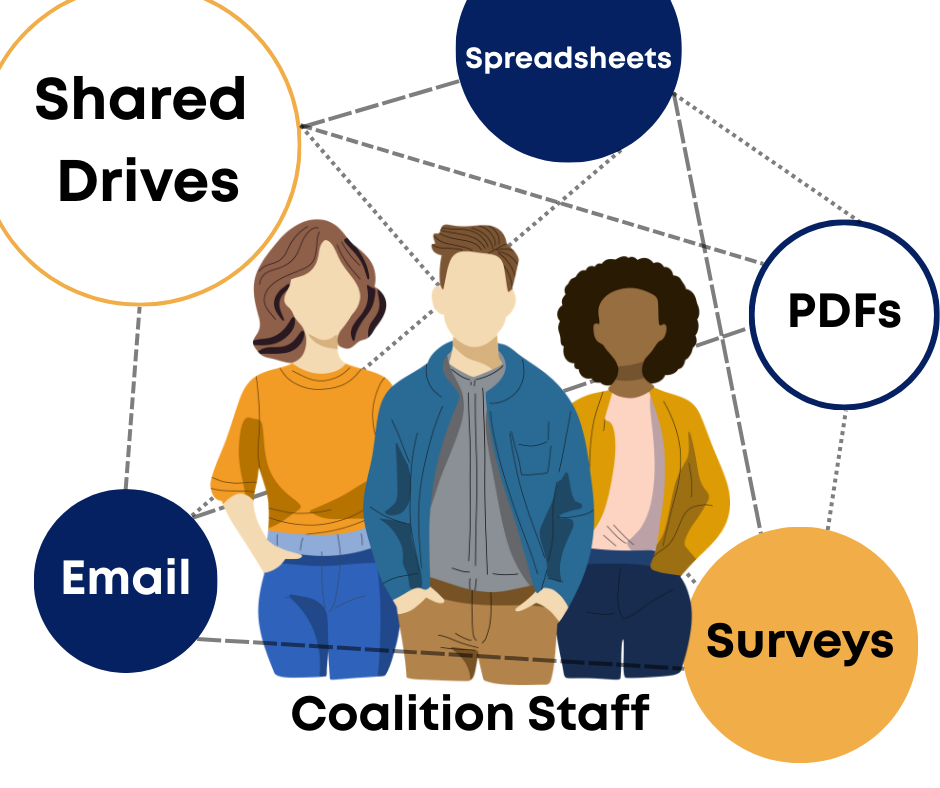
Many grant-funded nonprofits rely on a patchwork of tools to track their work:
Over time, information becomes fragmented across platforms, staff, and systems. There’s no single source of truth, just a growing web of files and folders that are difficult to maintain, let alone analyze.
In fact, technology fragmentation is one of the most commonly cited operational barriers. When data is scattered, reporting becomes time-consuming and error-prone, and institutional knowledge walks out the door when staff turnover happens. Coalition infrastructure is a necessity.
Grant-funded collaboratives often manage multiple funding sources at once, each with:
Staff are forced to retroactively piece together data that was never collected in a consistent or standardized way. This leads to duplicated work, last-minute scrambles, and ongoing anxiety around audits and compliance.
Instead of data supporting the mission, it becomes a constant source of stress. Coalitions need systems to help lift that burden and offer the clarity, organization, and credibility needed to secure and grow funding.
For coalitions, statewide initiatives, and multi-agency networks, data challenges grow exponentially.
These organizations often:
Without clear systems in place, coalition staff spend enormous energy chasing down incomplete reports, correcting inconsistencies, and translating data into funder-ready language. Poorly designed data practices can create risk, reduce member trust, and introduce compliance challenges across the network. Well-designed systems, however, can strengthen coordination and foster responsible data practices.
In many coalitions and networks, data responsibilities fall on program managers or coordinators whose primary expertise is convening partners, coordinating initiatives, prevention, policy/systems change, or capacity-building, not data management.
Without trauma-informed, nonprofit-specific tools, staff are left juggling:
This not only increases burnout but also limits the organization’s ability to use data strategically for learning, improvement, and storytelling.
When data is only used to “check a box” for funders and reporting, organizations miss its true value.
Data can (and should) help coalitions, networks, and alliances:
But that only happens when systems are designed with mission, people, and real-world workflows in mind.
The good news: data challenges are solvable. The fix isn’t working harder. It’s working smarter with tools and processes built for the nonprofit ecosystem.
A centralized data management system allows organizations to:
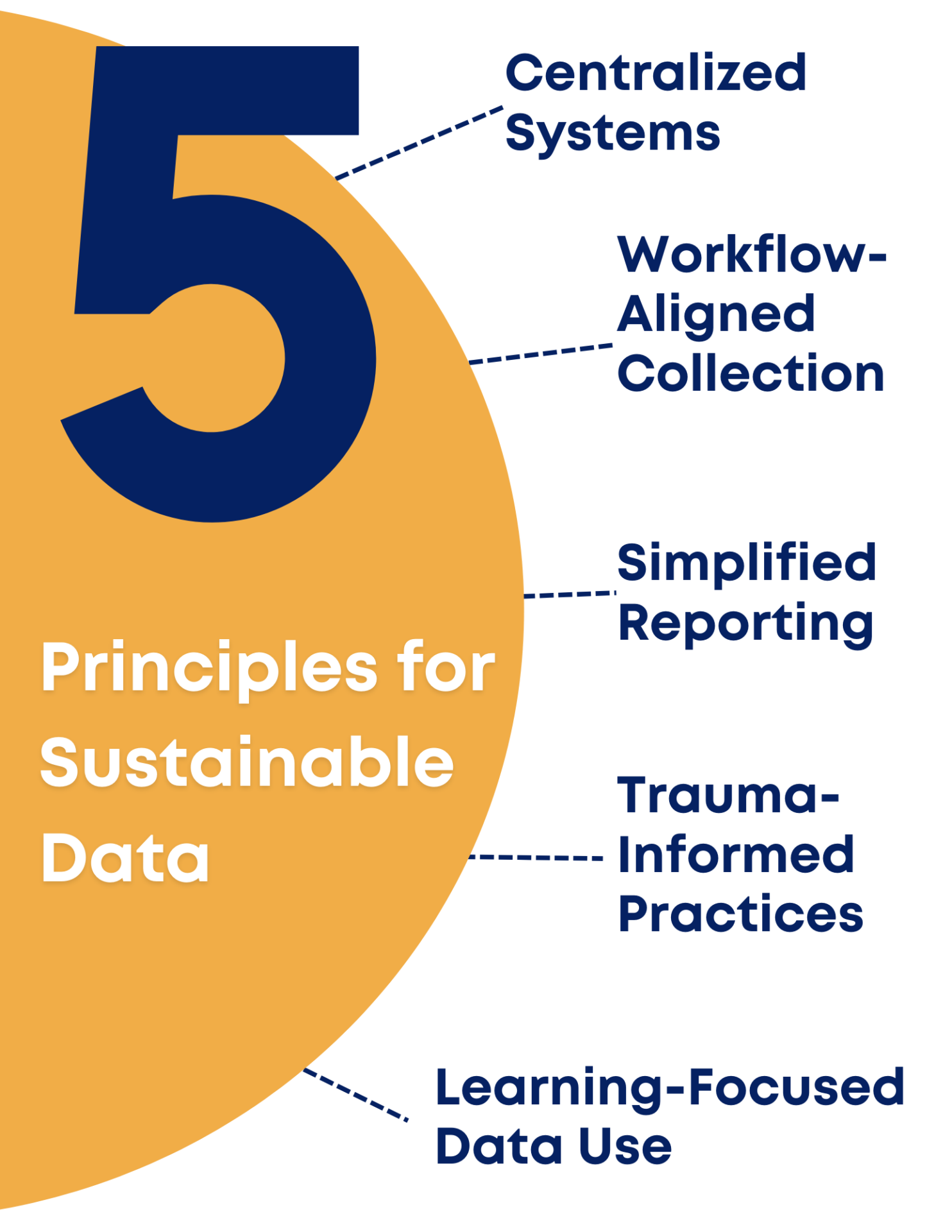
For coalitions and grant-funded networks, centralized systems are especially critical for managing partner reporting and supporting regional, statewide, and national initiatives.
Effective data systems should reflect how nonprofits actually operate, not force staff into rigid, corporate-style processes.
That means:
When data collection fits naturally into day-to-day work, accuracy improves and resistance decreases.
Instead of rebuilding reports from scratch every quarter, coalitions, networks, and alliances benefit from systems that:
This saves time, reduces stress, and allows staff to focus on mission-critical work rather than administrative clean-up.
Many grant-funded collaboratives work with sensitive populations and complex systems. Data tools must prioritize:
This is especially important for organizations working in domestic violence, sexual assault, human trafficking, homelessness, child advocacy, and related fields.
When data systems are accessible and well-designed, organizations can move beyond compliance and toward continuous improvement.
Data becomes a way to:
Coalition Manager was built specifically for grant-funded coalitions, networks, and alliances navigating these exact challenges.
Rather than forcing organizations to adapt to generic software, Coalition Manager is designed to:
Most importantly, it reflects a deep understanding of nonprofit realities like limited capacity, complex funding structures, and missions rooted in community impact.
Grant-funded collaboratives don’t struggle with data because they lack commitment or expertise. They struggle because too many systems weren’t built for how nonprofits actually work.
With the right tools, data can shift from a constant source of stress to a powerful asset, one that supports transparency, strengthens funding relationships, and amplifies impact.
When data works with your mission instead of against it, everyone benefits: staff, partners, members, funders, and most importantly, the communities you serve.
Interested in more resources on nonprofit operations, grant management, and coalition support? Explore the Coalition Manager Resource Center for practical insights designed for grant-funded organizations.