

In homelessness response systems, “good data” gets talked about constantly, but it is rarely defined in a way that’s practical for the people doing the work. For many organizations, data quality can feel like a compliance exercise: filling out required fields, running reports, and hoping everything lines up at the end of the quarter. In reality, good data is the foundation for understanding what’s happening across your network, making informed decisions, securing funding, and coordinating efforts across organizations.
So what does “good data” actually look like in homelessness initiatives?
High-quality data reflects what’s actually happening across programs, initiatives, and member organizations, not approximations or assumptions.
If a training was delivered, a partner engaged, or a program milestone reached, that activity should be captured. This allows coalitions to clearly see participation, progress, and gaps across the network, rather than relying on incomplete or inconsistent information.
Completeness is one of the most critical and most overlooked components of data quality. At the coalition level, this means key information about member participation, activities, trainings, and outcomes is consistently captured across the network.
Missing data doesn’t just create reporting challenges; it creates blind spots. When member activity isn’t recorded or engagement goes untracked, parts of the network become invisible.
These gaps make it difficult to understand the full scope of activity, identify where support is needed, and allocate resources with confidence. Good data means members consistently contribute information and key activities are recorded intentionally, not skipped or left incomplete.
Learn more in our article: The Invisible Data Gaps Undermining Homelessness and Anti-Trafficking Initiatives
Data loses value when it isn’t current. Timeliness refers to how up-to-date information is across the network.
In practice, this means:
Why it matters:
Accuracy goes beyond “not wrong.” It means data can be trusted and consistently reflects what actually occurred across the network.
Even small inaccuracies can have downstream effects:
At the coalition level, accuracy depends on shared understanding and consistent practices. Good data requires:
For grant-funded collaboratives, data is both a lifeline and a burden. It is important to explore why data is so hard for coalitions, networks, and alliances, and offer practical, mission-aligned ways to fix it.
In homelessness response networks, coalitions rely on a shared system to bring together information from multiple member organizations, capturing activity, engagement, and outcomes across the network. That only works if everyone is using the same definitions, standards, and processes.
Shared data standards, whether defined at the federal, state, or coalition level, exist to ensure consistency across members and initiatives.
Without consistency:
Good data means:
Good data doesn’t happen by accident. It’s maintained through ongoing effort.
Many coalitions and Continuums of Care establish data quality practices to:
Good data is not a one-time achievement. It is a continuous practice.
While many communities use systems like HMIS for client-level data, coalition-level data plays a different but equally important role, helping organizations coordinate efforts, track engagement, and understand impact across an entire network.
Here’s the part that often gets missed: data isn’t truly “good” unless it’s used.
High-quality data enables:
When members and leadership trust the data, they use it. And when data is consistently used, maintaining quality becomes a shared priority, not a burden.
Good data practices must balance:
At the coalition level, this means using data responsibly and ensuring it accurately represents the work happening across the network. Being trauma informed is a vital component in how services are delivered, it’s also important for the systems that support the work behind the scenes.
Data should be shared and interpreted in ways that build trust among members, not undermine it. When data is used to represent collective impact, it should be clear, consistent, and not misleading or taken out of context.
Good data in homelessness initiatives is about clarity, trust, and impact across the network. At its best, good data is:
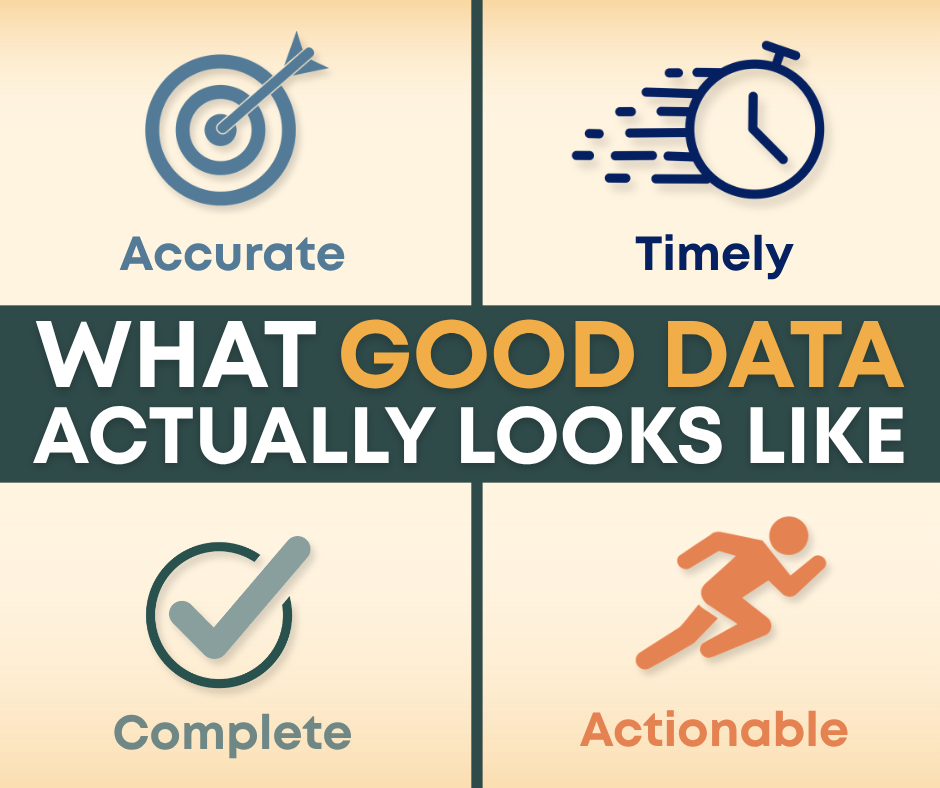
When data is done well, it not only measures the system, it helps improve it.
Learn how Coalition Manager helps coalitions and networks better understand, coordinate, and demonstrate their impact.
Your organization deserves tools that support the mission. Let’s see what Coalition Manager can do for you. Contact us today.